Funny or Risque Wakes and Funerals
St. Patrick's Day is a time-honored, revered day for all-out celebration and shenanigans. Whether you live in Ireland, have Irish heritage, or you just enjoy taking on the luck of the Irish for one day only, St. Patrick's Day is now a worldwide celebration. After all, who wouldn't want to take part in a day full of merriment, kicking up your feet and, let's face it, drinking some good ol' fashion pints? What can we say… the Irish celebrate unlike anyone else.
But the flair of Irish celebrations does not only extend to how they honor St. Patrick's Day. The Irish are also known for the jubilation and character that they bring to another time-honored tradition ﹘ funerals.
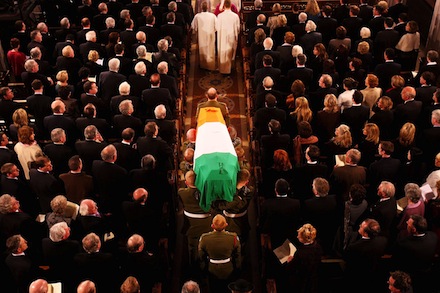
As funeral professionals, you have probably heard about the intricacies and traditions behind the "Irish Wake." A multi-day celebration filled with mourning, cheer, stories and, yet again, drinking. But while the historical Irish traditions of stopping the clocks and turning around all the mirrors in the home may be seldom practices any more, there are still many Irish funeral traditions that hold strong… and that the rest of us could learn from. Here are a few of our favorites.
1. Death is a public event ﹘ no invitation required.
One statement that is very rare to hear after an Irish funeral is, "I didn't go because I wasn't invited." And while many funerals around the world certainly host viewings and services that are welcome to all friends and families, there still seems to be a hesitation when it comes to funeral attendance.
For families, they may feel overwhelmed about the prospect of inviting anyone and everyone that they know to such an emotional event. And for guests, many people may feel as though they need to be directly invited to a funeral, or they may not be close enough to the deceased for their presence to be "appropriate." But this shouldn't be the case. We should take a note from our Irish friends and discourage the idea that a funeral should be an RSVP cocktail-type reception. Instead, it should be a chance for families to hear stories about their loved one that they have never heard before, or see just how many people in the community their loved one had influenced. The more memories, the merrier!
2. Wakes make you a part of the grieving process.
In our current day, it's very easy to remove yourself from the dying process. After all, many people nowadays will pass away at hospice, rather than at home. Then the body is taken to the funeral home to have a service, then to the cemetery to be buried. And before families know it, they were so busy focusing on all of the decisions that had to be made that they barely had a chance to be present in the moment.
However, many Irish families still hold wakes at the home of the deceased and take a couple days to grieve and honor their loved one before the body gets taken away to the funeral home, the church or the cemetery. This is so they can fully connect to the moment and face the burden of grieving head on. A room will be arranged for the deceased at home after their body has been prepared, and then friends and family from all over town will come to pay their respects. They do this by sharing their prayers and wishes for the family, joining them in sharing memories, and celebrating the life of their loved one all together.
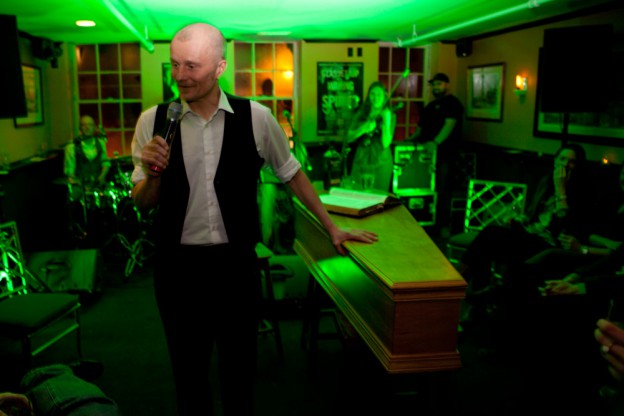
3. A funeral is a chance to celebrate… big time!
Many older Irish men and women claim that the day that a person dies is their "third birthday." Their first is, of course, the day that they are born, the second is the day that they are baptized, and the third represents the day that they have entered on to the eternal, happy life. When you look at it this way, how can it be anything but a day of celebration?
An Irish funeral has all of the components of a great and honorable event. Friends and family gathering to share their favorite stories and memories of the deceased, laughter and singing filling the air, and yes, even the occasional crying. No emotion is left out of the mourning process, but it helps those that are grieving both accept what has happened, look towards the future, and heal in whatever way they need to. (Plus, the delicious food and drinks that are often shared at an Irish funeral don't hurt the celebration either.) If only all funerals could be this comforting and celebratory!
4. Stories and memories are the focus of the event.
One of the most memorable and important aspects of an Irish funeral (and the most consoling for the family) are the stories that are shared during the process. Hours and days pass by while friends, family, acquaintances ﹘ anyone and everyone that has a story to tell ﹘ will share tales of a person's life, among sounds of laughter and tears. While storytelling is a natural part of many cultures, the Irish truly understand the healing power of memories and that sharing them out loud helps people cope and come to terms with death. Plus, sharing a person's memory and life accomplishments helps to honor their final journey.
However, families do not have to be in attendance at a funeral in order to share these stories, and memory sharing can (and should) last long after the funeral has come to an end. With f1Connect's social memorial websites, families can join together online to share a person's entire life story, build upon memories with others, and recreate some of their favorite moments with them. This collection of online memories is then stored online forever, ready to access whenever they need to feel close to their loved one again.
For more information on our all-in-one f1Connect website platform for your families, click here or calling us at (800) 798-2575 ext. 5!
Which of these classic Irish funeral traditions do you think that we could learn from here in America? Are their any other wordly end-of-life traditions that you enjoy? Be sure to let us know your thoughts in the comments below.

Source: https://blog.funeralone.com/grow-your-business/unique-services/4-irish-funeral-customs-we-can-all-learn-from/
0 Response to "Funny or Risque Wakes and Funerals"
Post a Comment